
Hospital cleaning goes beyond making spaces look clean—it directly impacts patient safety, infection control, and regulatory compliance. For healthcare facilities in Dallas, TX, the difference between basic cleaning and medical-grade sanitation can mean the difference between protecting patients and risking hospital acquired infections.
This guide explains what facility managers and healthcare providers need to know about professional hospital cleaning services, regulatory requirements, and systematic approaches that actually work.
What Makes Hospital Cleaning Different From Regular Commercial Cleaning
Healthcare facilities face unique challenges that standard cleaning services cannot address. Medical facilities require adherence to best cleaning and sanitization practices, specialized procedures, trained technicians, and strict infection control protocols that protect patients and employees from harmful bacteria and cross contamination. Medical cleaning is a specialized cleaning service designed for healthcare environments, emphasizing thorough disinfection, sanitation, and infection control to ensure safety and compliance with health standards.
The Critical Difference: Surface vs. Sanitation
Regular office cleaning focuses on visible dirt and maintaining appearance. Hospital cleaning requires disinfection at the highest level to eliminate germs that cause infections. Every surface in exam rooms, waiting rooms, and operating rooms must be treated as a potential source of contamination. Following best cleaning and sanitization practices is essential to reduce infection risk and improve patient outcomes.
Healthcare cleaning services must:
- Disinfect high-touch surfaces using EPA-registered hospital-grade products
- Follow specific procedures for different facility areas based on contamination risk
- Maintain detailed documentation for health inspections and compliance audits
- Use color-coded equipment to prevent cross contamination between clean and contaminated areas
- Employ trained professionals who understand healthcare industry regulations
The stakes in healthcare cleaning are measurably higher. Studies show that proper sanitation in medical offices and clinics directly reduces the spread of infections and improves patient satisfaction.
Why Healthcare Facilities in Dallas TX Need Specialized Cleaning
Healthcare providers in the Dallas area must comply with Texas Department of Health regulations, CDC guidelines, and OSHA safety requirements. Healthcare cleaning services are also required to comply with CDC, JCAHO, and HIPAA regulatory standards. Standard cleaning service providers typically lack the expertise and procedures necessary to meet these regulatory standards, which are essential for hospitals, clinics, surgical centers, and other healthcare facilities.
Key Regulatory Requirements for Medical Facilities:
- OSHA Bloodborne Pathogens Standard (29 CFR 1910.1030)
- CDC Guidelines for Environmental Infection Control in Healthcare Facilities
- Texas Health and Safety Code requirements for medical facility cleanliness
- EPA regulations for healthcare cleaning products and disinfection procedures
- Joint Commission standards for hospital environment of care
Dallas TX area healthcare facilities face regular inspections where cleaning and sanitation documentation becomes critical. Facilities without proper procedures and records risk compliance violations, reputation damage, and most importantly, patient safety.
Critical Areas in Hospital and Medical Facility Cleaning
Different areas within healthcare facilities require specific cleaning protocols based on contamination risk and patient contact. These protocols are also essential for other healthcare facilities such as clinics, surgical centers, and veterinary clinics to maintain a safe and sanitary environment.
Exam Rooms and Patient Care Areas
Medical office cleaning in exam rooms requires disinfection after every patient visit. All surfaces that patients contact—examination tables, chairs, doorknobs, light switches—must be properly disinfected to prevent the spread of infections between patients.
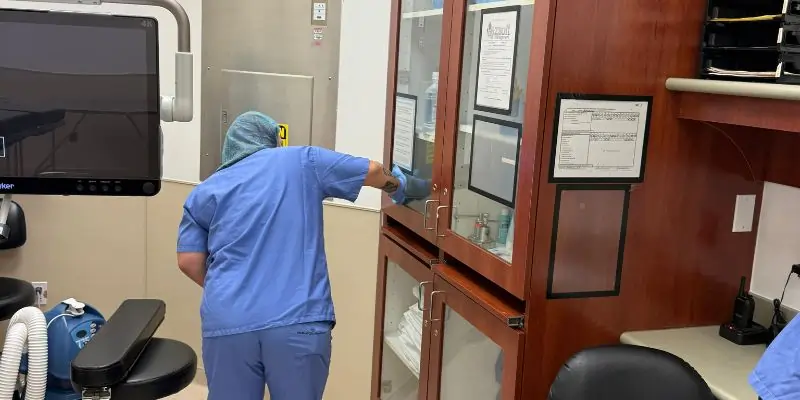
The cleaning process for exam rooms includes:
- High-level disinfection of all patient contact surfaces
- Proper disposal of medical waste following healthcare industry regulations
- Floor cleaning with hospital-grade disinfectants
- Air quality maintenance through proper ventilation system cleaning
Operating Rooms and Critical Care Areas
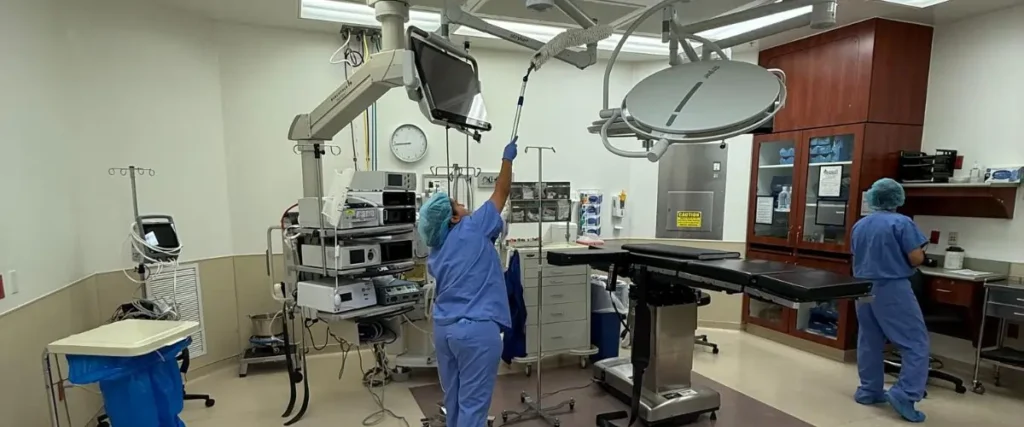
Operating rooms demand the highest level of cleanliness in any healthcare facility. These spaces require deep cleaning protocols that eliminate even microscopic contamination that could compromise patient safety during surgical procedures.
Specialized procedures for operating rooms include:
- Terminal cleaning after each surgical procedure
- Use of EPA-registered sterilants and high-level disinfectants
- Systematic cleaning from cleanest to dirtiest areas
- Documented verification of cleaning completion before next procedure
Waiting Areas and Common Spaces
Waiting rooms and common areas in medical clinics see constant patient and visitor traffic, creating ongoing contamination risk. These high-traffic zones require frequent cleaning throughout the day to maintain a safe environment.
Daily cleaning protocols for waiting areas focus on:
- Multiple daily disinfection of high-touch surfaces
- Floor maintenance to prevent slip hazards and dirt accumulation
- Restroom sanitation using healthcare-grade products
- Trash and medical waste removal following proper disposal procedures
Nurses Stations and Administrative Areas
Nurses stations serve as central hubs where healthcare professionals spend significant time. These areas require regular disinfection while minimizing disruption to critical healthcare operations.
Cleaning procedures maintain:
- Computer keyboard and equipment disinfection
- Work surface sanitation between shifts
- Supply storage area organization and cleanliness
- Documentation that supports infection control programs
In addition to this article we have also provided an article: Medical Equipment Cleaning Guide
Infection Control and Cross Contamination Prevention
The primary goal of hospital cleaning is preventing infections that harm patients. Healthcare associated infections affect thousands of patients annually, with proper cleaning and disinfection serving as the first line of defense.
How Cross Contamination Occurs in Healthcare Facilities
Cross contamination happens when harmful bacteria and germs transfer from contaminated surfaces to clean areas. Without proper procedures, cleaning equipment itself becomes a contamination source, spreading infections rather than preventing them.
Common cross contamination risks include:
- Using the same cleaning supplies in contaminated and clean areas
- Improper hand hygiene between cleaning different facility zones
- Inadequate disinfection contact time on surfaces
- Failure to clean cleaning equipment between uses
- Mixing incompatible cleaning products that reduce effectiveness
Systematic Prevention Through Color-Coded Equipment
Professional healthcare cleaning services use color-coded microfiber systems that prevent cross contamination. Different colored supplies designate use in specific areas—red for restrooms, blue for patient areas, green for food service, yellow for isolation rooms.
This systematic approach ensures that equipment used in high-contamination areas never contacts patient care spaces, dramatically reducing infection spread throughout the facility.
What Professional Healthcare Cleaning Services Should Provide
Facility managers evaluating medical office cleaning services need to verify specific capabilities that protect patients and meet regulatory requirements.
Essential Healthcare Cleaning Service Components:
Training and Expertise
Professional healthcare cleaning requires trained technicians who understand infection control, proper disinfection procedures, and healthcare industry regulations. Standard commercial cleaners lack this specialized knowledge.
Qualified cleaning professionals should demonstrate:
- Understanding of CDC healthcare cleaning guidelines
- Knowledge of proper disinfectant contact times and application
- Familiarity with medical waste disposal regulations
- Training in bloodborne pathogen safety procedures
- Experience with healthcare facility compliance documentation
EPA-Registered Healthcare Cleaning Products
Hospital cleaning demands EPA-registered disinfectants proven effective against healthcare-associated pathogens. Standard cleaning products used in offices and other commercial facilities do not meet healthcare facility requirements.
Professional services must use:
- EPA List K disinfectants effective against emerging viral pathogens
- Products registered for healthcare facility use
- Environmentally responsible options that protect patient well being
- Proper dilution ratios verified through documentation
- Chemical safety procedures that comply with OSHA standards
Documentation That Protects Your Facility
Healthcare facilities require detailed cleaning records for inspections, compliance audits, and infection control programs. Without proper documentation, facilities cannot demonstrate adherence to required standards.
Critical documentation includes:
- Daily cleaning logs with timestamps for all areas
- Product usage records showing EPA registration numbers
- Staff training certifications and ongoing education
- Inspection checklists completed by supervisors
- Incident reports for any cleaning-related safety concerns
Craddock’s Systematic Approach to Healthcare Facility Cleaning in Dallas-Fort Worth
Healthcare providers in Dallas TX choose Craddock’s Cleaning Services because medical facility cleaning requires the same accountability and documentation that defines our approach to all commercial cleaning.
Our 5-Step Healthcare Facility Protocol:
1. Facility Assessment and Custom Protocol Development
We evaluate your specific facility type—whether hospital, medical office, clinic, or other healthcare facility—and create cleaning procedures that address your unique needs and regulatory requirements.
No assumptions. Every medical facility has specific requirements based on services provided, patient volume, and compliance needs. We document expectations before the first cleaning.
2. Healthcare-Trained Crew Assignment
Medical office cleaning services require technicians who understand healthcare environments. Our teams receive specialized training in infection control, proper disinfection procedures, and healthcare industry regulations.
Background-checked professionals who understand that their work directly impacts patient safety and healthcare facility reputation.
3. Supervisor Verification at Every Visit
Healthcare cleaning cannot rely on spot-checks. Our supervisor inspects every critical area against facility-specific checklists, verifying proper disinfection and documenting completion.
This systematic verification ensures consistent quality across all areas—from waiting areas to exam rooms to specialized treatment spaces.
4. Digital Documentation Delivered After Each Service
Every cleaning visit generates timestamped digital logs showing completed tasks, products used, and any issues identified. This documentation supports your compliance programs and provides inspection-ready records.
Healthcare facilities receive reports they can provide directly to inspectors, administrators, or accreditation reviewers without additional work.
5. Direct Contact for Urgent Healthcare Facility Needs
Medical facilities face urgent cleaning needs—spills, contamination incidents, or unexpected patient volume requiring additional services. Contracted clients have direct contact to the business owner, not a call center, for immediate response.
When patient safety depends on rapid cleaning response, facility managers need accountability, not automated systems.
Protecting Patient Safety Through Professional Healthcare Cleaning
The importance of professional hospital cleaning extends beyond regulatory compliance. Clean healthcare facilities create a healthy environment that supports patient recovery, reduces infection spread, and demonstrates quality care to patients and visitors.
Professional healthcare cleaning services can also help facilities save money by reducing waste, optimizing inventory, and preventing costly infections.
Healthcare facilities that maintain the highest level of cleanliness see measurable benefits:
- Reduced hospital acquired infections and better patient outcomes
- Higher patient satisfaction scores related to facility cleanliness
- Fewer employee sick days from workplace-acquired infections
- Improved facility reputation in the healthcare community
- Smoother regulatory inspections with complete documentation
For healthcare providers in Dallas, Fort Worth, and the surrounding TX area, professional healthcare cleaning services provide the specialized expertise that protects patients, supports quality care, and maintains compliance with demanding healthcare industry standards.
Professional Healthcare Cleaning That Protects Dallas-Fort Worth Medical Facilities
Healthcare facilities throughout the Dallas TX area depend on professional cleaning services that understand the critical importance of proper sanitation, infection control, and regulatory compliance.
Craddock’s Cleaning Services brings the same systematic approach and direct accountability to healthcare cleaning that has earned 95% client retention across all commercial facilities in Dallas-Fort Worth. We provide medical facility cleaning services, healthcare facility maintenance, and hospital cleaning support that protects patients, satisfies inspectors, and gives facility managers confidence that cleaning meets the highest level of standards.
For healthcare providers who need more than basic cleaning service—who require documented procedures, trained professionals, and direct accountability—contact Craddock’s Cleaning Services to discuss your facility’s specific needs.
Your patients deserve a clean, safe environment. Your facility deserves a cleaning partner who takes that responsibility seriously.
FAQ – About Hospital and Medical Facility Cleaning
Worth Reading
Explore the Depths: Delve into Our Latest Blog Posts for Expert Insights!
Jeremy Craddock
No comments
Hospital Cleaning: The Complete Guide to Healthcare Facility Standards in Dallas-Fort Worth
Read more
Jeremy Craddock
No comments